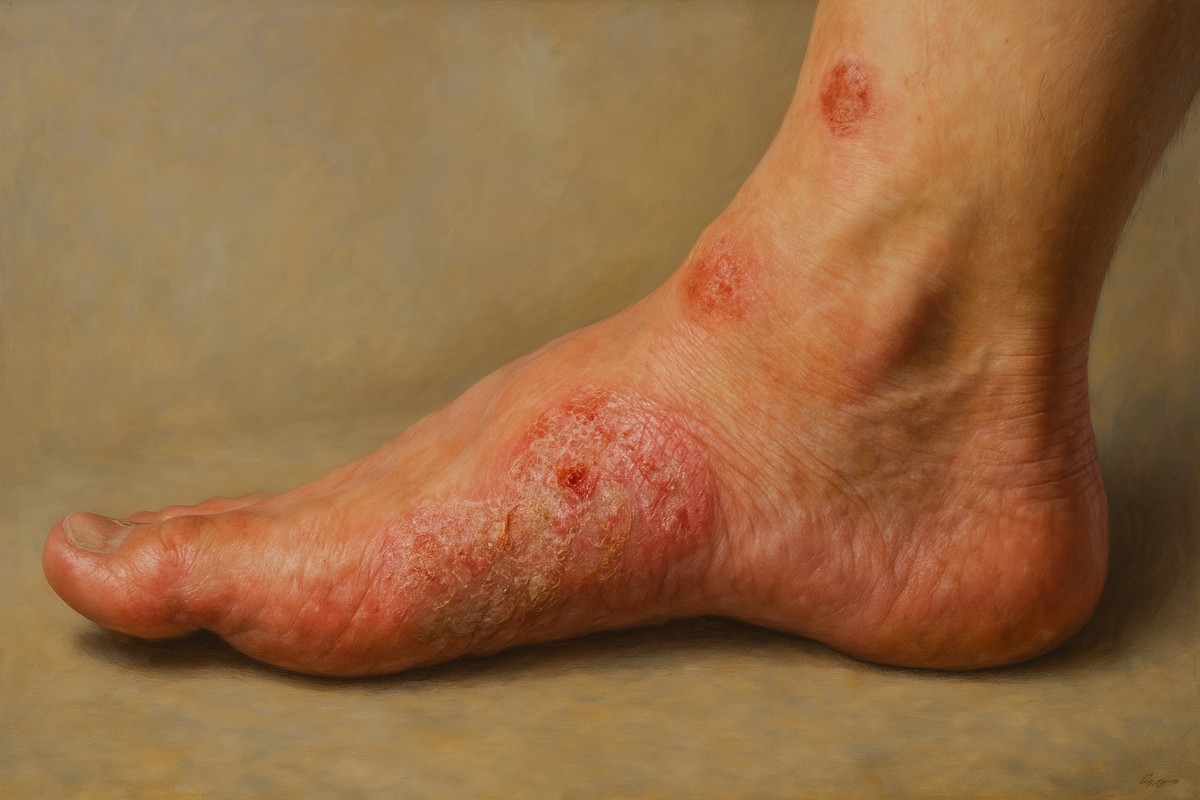
Wounds that refuse to heal can be a real challenge - not only for the patient, but also for the medical team. Chronic inflammation, infections, delayed regeneration - all of this prolongs healing time and worsens the patient's quality of life. In such cases, supportive methods are increasingly being used, one of which is ozone therapy.
This is a modern approach that uses the well-known properties of ozone - a mixture of oxygen and tri-atomic oxygen (O₃) - to support the body in the healing process. Importantly, this therapy is not only antimicrobial, but also regenerative and anti-inflammatory. Let's take a look at how exactly it works and when it could prove groundbreaking.
How does ozone promote wound healing?
Ozone can be applied topically - to the skin or directly to the wound. In the form of gas, ozonated water or by means of special dressings. And although the word 'ozone' itself is associated with the atmosphere rather than with medicine, its effect in wound therapy is increasingly well documented scientifically.
- Acts as a natural disinfectant
Ozone destroys bacteria, viruses and fungi. It does this quickly and effectively - by oxidising their cell membranes. As a result, it can be helpful where traditional antiseptic methods fail and antibiotics stop working. - Increases oxygen access to tissues
A wound needs oxygen to heal. Ozone improves tissue oxygenation, which translates into accelerated cellular metabolism. Cells have more 'fuel' to function and the body regenerates damaged structures faster. - Reduces inflammation and swelling
Many patients experience relief after the first sessions. Ozone relieves pain, reduces redness and swelling and acts as a natural 'quieter' of inflammatory reactions. - Promotes vascular reconstruction
By stimulating angiogenesis - the process of creating new vessels - ozone therapy promotes better blood supply to the site of injury. This is crucial especially in cases of wounds that heal very slowly or are prone to recurrence.
Example from practice: wound after surgery
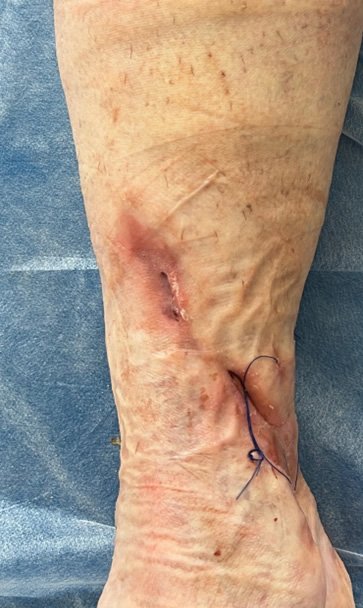
Instead of speaking only in theory, we will show the concrete. Below we describe the case of a patient who received topical ozone therapy as an adjunct to post-operative treatment in the ankle joint.
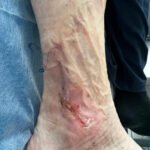
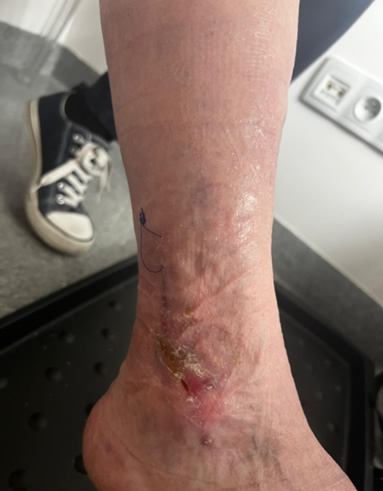
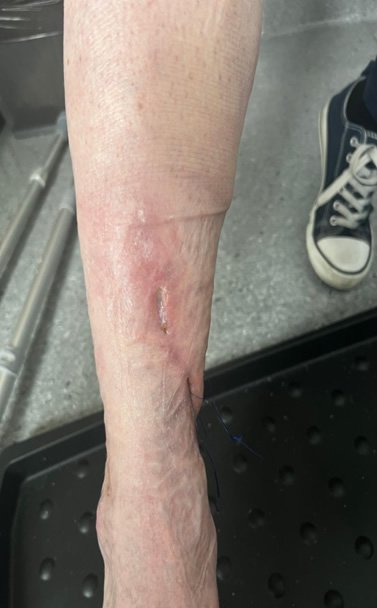
- Starting point: wound with visible exudation, swelling and redness. The site was painful, with signs of inflammation.
- Intermediate stage: after several sessions, a marked reduction in redness, a reduction in discharge and the appearance of healthy granulation tissue was noted.
- Final resultThe wound was almost completely healed. The skin was elastic, without signs of infection, without scarring, with good blood supply.
This is an example that shows that ozone therapy can realistically speed up the healing process and reduce the risk of complications.
When is ozone therapy worth considering?
Ozone therapy is primarily used for treatment:
- post-operative wounds (e.g. after orthopaedic or vascular surgery),
- ulcers (e.g. in patients with diabetes, venous insufficiency),
- decubitus ulcers,
- traumatic wounds,
- infected wounds that do not respond to standard treatment.
However, it is worth remembering that ozone therapy does not replace traditional treatment - it is its supplementary. The decision to implement should always rest with the doctor, who will assess the patient's general condition and potential contraindications.
Is ozone therapy safe?
In the hands of experienced personnel - yes. Applied topically and according to guidelines - it has no side effects and can be repeated. However, like any method, it is not for everyone.
Contraindications:
- hyperthyroidism,
- thrombocytopenia (reduced platelet count),
- active cancer,
- allergy or hypersensitivity to ozone.
This is why it is important to consult a doctor before starting therapy.
Modern support, real results
Ozone therapy is an example of how science and technology can support the body's natural regenerative processes. For hard-to-heal wounds - where every day counts and every improvement matters - it can be valuable therapy support.
If you are struggling with a wound that refuses to heal - talk to your doctor about the possibility of including ozone therapy in your treatment plan. Sometimes it's these modern methods that make the biggest difference.
Sources:
- Martínez-Sánchez G. et al. (2005). Therapeutic efficacy of ozone in patients with diabetic foot. European Journal of Pharmacology, 523(1-3), 151-161.
- Elvis AM, Ekta JS. (2011). Ozone therapy: A clinical review. Journal of Natural Science, Biology and Medicine, 2(1), 66-70.
- Kim HS, Noh SU, Han YW, et al. (2009). Therapeutic effects of topical application of ozone on acute cutaneous wound healing. Journal of Korean Medical Science, 24(3), 368-374.
FAQ
Questions and answers
Yes, but only in strictly defined cases and under medical supervision. Some forms of ozone, such as ozonated oil, are safe to use at home as support between outpatient treatments. Self-application of ozone gas without medical knowledge can be dangerous.
The first effects can be seen after just a few treatments, especially if the wound was heavily infected or swollen. However, the overall healing process depends on many factors, including the size of the wound, co-morbidities and the patient's lifestyle.
No. Ozone therapy is an adjunctive method, not a replacement. It can support surgical or pharmacological treatment, reducing healing time and the risk of complications, but it does not eliminate the need for causal treatment, especially in severe cases.
Yes, but with individual risk assessment and adaptation of the procedure. In children and seniors, the ozone concentration and exposure time must be chosen particularly carefully. In many cases, the therapy proves to be safe and effective - e.g. in the treatment of burns or bedsores.
Author of the article
