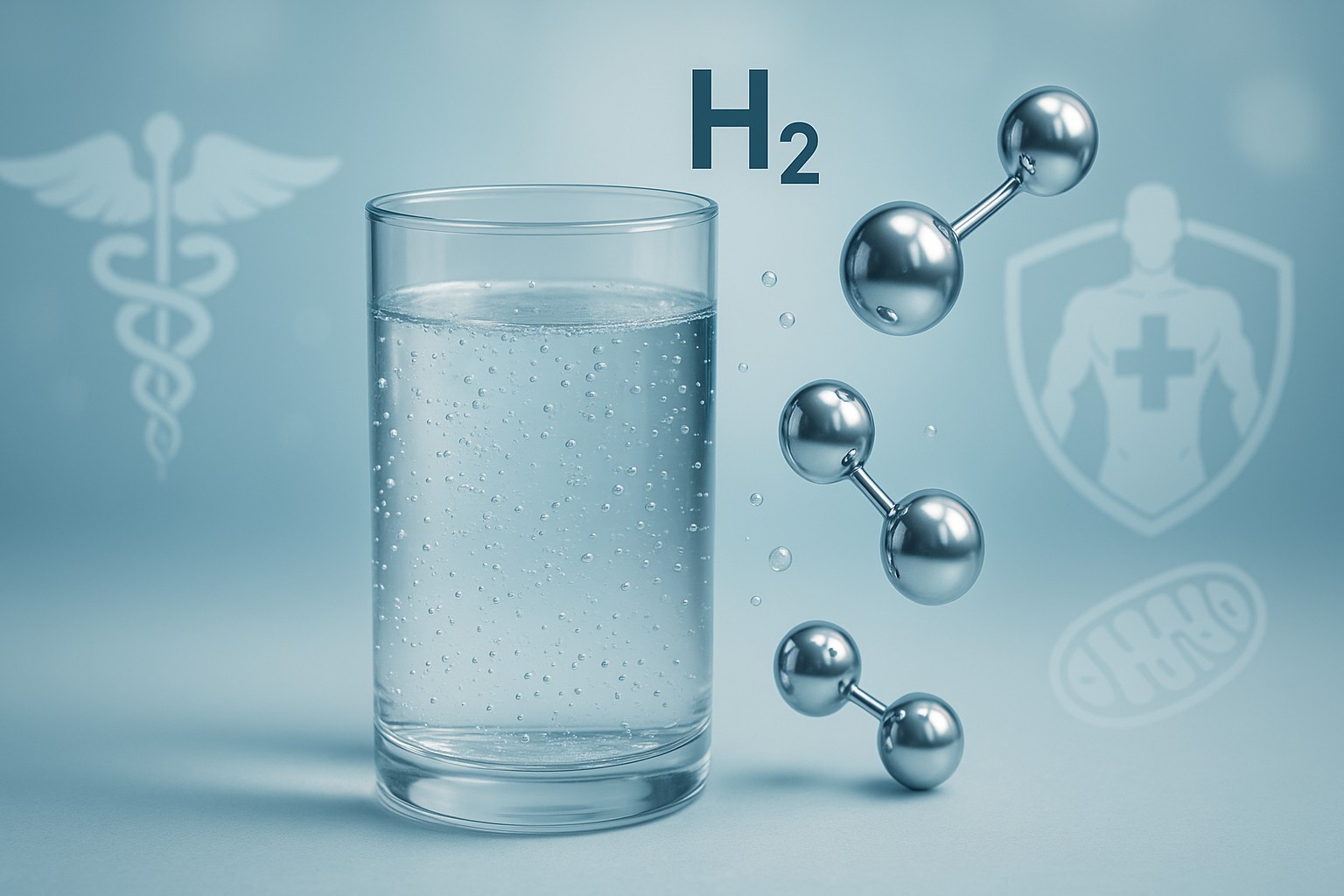
Molecular hydrogen (H₂) is the simplest, yet most revolutionary molecule in the history of medicine. Although neglected for years, today it is becoming a key element of the anti-ageing therapies, sports support and chronic disease management. Its uniqueness is that it works where other antioxidants fail - it reaches the mitochondria, the brain and even the cell nuclei. Learn the scientific facts that will change Your perspective on health.
What is molecular hydrogen?
Molecular hydrogen is a gas consisting of two hydrogen atoms (H₂). In nature, it occurs in thermal water, certain vegetables (e.g. broccoli) and - interestingly - in our intestines, where it is produced by bacteria.
Unfortunately, modern diets and lifestyles limit its natural production. Therefore, scientists have developed methods of hydrogen supply in concentrated form: hydrogen waters, inhalations and even magnesium capsules that release hydrogen in the stomach
How does H₂ work? See its 3 main mechanisms.
Selective free radical scavenger
Hydrogen does not destroy all radicals - it targets the most damaging ones:
hydroxyl radical (-OH) i peroxynitrite (ONOO-). This is because they are responsible for DNA damage, accelerated ageing and inflammation. This ensures that H₂ does not interfere with the beneficial processes in which the free radicals have a signalling role.
Activation of longevity genes
Molecular hydrogen therapy stimulates the Nrf2 pathway, which triggers the production of antioxidant enzymes (e.g. superoxide dismutase) as a result, the body strengthens its own defences. The positive effects persist even after the therapy has ended.
Mitochondrial protection
Mitochondria are the power plants of cells. Hydrogen protects them from damage by improving the efficiency of energy production (ATP). It is particularly important in regeneration of athletes. This is why athletes after hydrogen inhalation reports less fatigue i faster recovery.
checklist-schema]
Ways of administering H₂ - What works best?
- Inhalations, inhalation of a mixture of 2-4% H₂ with air is the fastest method to reach the organs. Used, among others, in lung therapies (COPD, COVID-19) - improves saturation after only 15 minutes
- Hydrogen water, The optimal concentration is 1.1-1.3 ppm. Drinking 1-2 litres a day reduces oxidative stress markers (e.g. MDA) by 35% after 4 weeks
- Intravenous injections, H₂-saturated saline solution is used in cardiology - reduces the area of necrosis after infarction by up to 20%.
How does technology support H₂ therapies?
- Monitoring applications: Algorithms that track oxidative stress levels (e.g. via smartwatch) suggest optimal doses of H₂.
- Microinhalers: Devices the size of a memory stick that connect to your phone and deliver H₂ in precise doses.
- Personalised therapies: AI analyses the patient's genetics to select a H₂-prone protocol for specific conditions (e.g. SOD1 gene mutation in ALS).
Molecular hydrogen is not a fad, but scientifically proven revolution. By combining precision with the absence of side effects, it becomes a tool for both healthy people (prevention) and those fighting disease. In an era of AI and personalised medicine, H₂ is an example of how nature and technology can go hand in hand. Are you ready to try it out? 🌿
FAQ
Questions and answers
Yes, from the age of 3. In Japan, hydrogen is even used for premature babies with brain damage.
No. Excess hydrogen is exhaled or excreted. Animal studies have shown no toxicity even at doses 100x higher than therapeutic.
Minimum 3 months for anti-ageing effects. In chronic diseases - continuous therapy.
Pilot studies indicate a reduction in symptoms by 35% after 6 weeks of inhalation.
Look for devices with medical certificates (e.g. ISO 13485) and bottled waters with a production date (H₂ volatilises within 2-3 hours after opening).
Yes. Molecular hydrogen masks reduce skin inflammation by 45% during the month.
Optimally 1.5-2 litres (concentration 1.1 ppm). In the case of chronic diseases, up to 3 litres
Depends on the purpose. Inhalations work faster (e.g. for asthma), water supports long-term detoxification.
Author of the article
